INC111 Learning Experience Evaluation
An end to end evaluation of the Positive Space Initiative: 2SLGBTQIA+ Awareness course (INC111), including diagnostic, needs analysis, and proposals using UX research and Service Design
The Positive Space Initiative: 2SLGBTQIA+ Awareness (INC111) course is a cornerstone of the federal public service's commitment to diversity, equity, and inclusion. However, the course saw a high no show and drop off rate.
Rather than focusing solely on the classroom, our UX team evaluated the complete learner journey, from course discovery and registration to pre-learning, live instruction, and engagement after course completion.
- Planned the UX research approach with the project team
- Ran heuristic evaluations of registration & learning
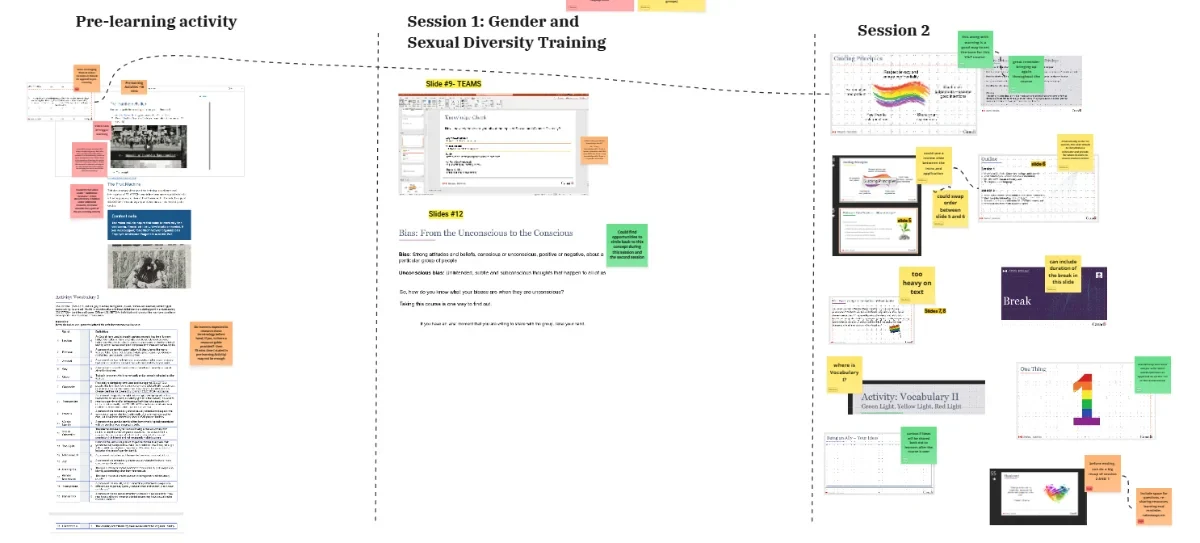
- Observed live course delivery as a learner
- Planned & facilitated learner co-design workshops
- Synthesized findings into prioritized recommendations
Although learner satisfaction scores were generally positive, the product owner lacked a holistic understanding of the learner experience.
High no show and drop off rate due to multi-day delivery and long sessions.
Element of "lived experience" is lacking from the course. These experiences help drive points home and build bridges between participants.
The course is mandatory for some learners, yet the reasons for its requirement are unclear.
The focus on allyship feels alienating to community members, as it primarily targets cis communities.
I triangulated insights from existing research, direct observation of focus groups and course attendance, and participatory workshops to build a complete picture of the learner experience.
- Reviewed prior interviews & focus groups
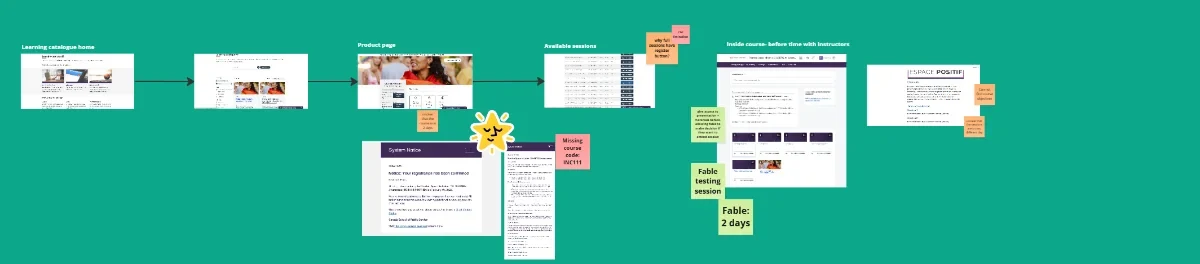
- Heuristic evaluation of registration & content
- Attended the course as a learner
- Mapped the journey across all four stages
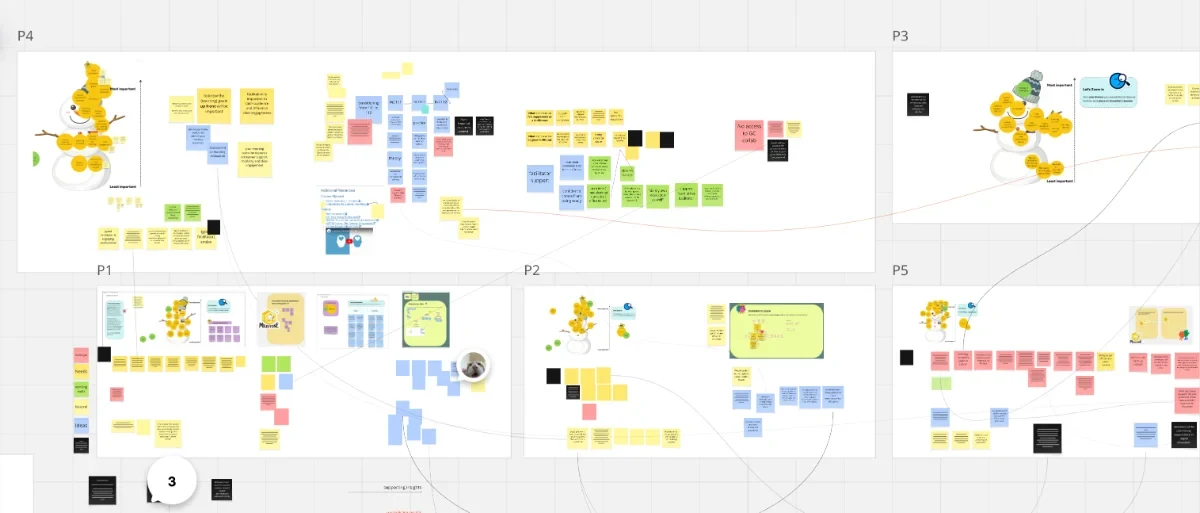
- Facilitated 5 co-design sessions
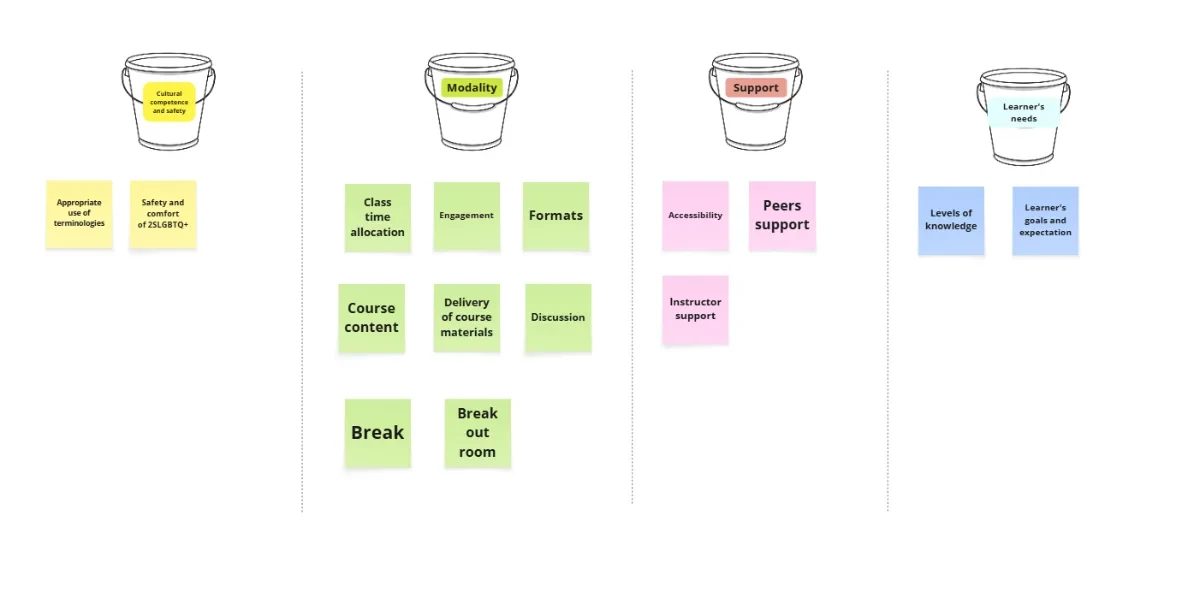
- Led affinity mapping & thematic synthesis
The broader project also included survey analysis, accessibility reviews, quality assessments, and operational data that allowed me to validate UX findings across multiple evidence sources.
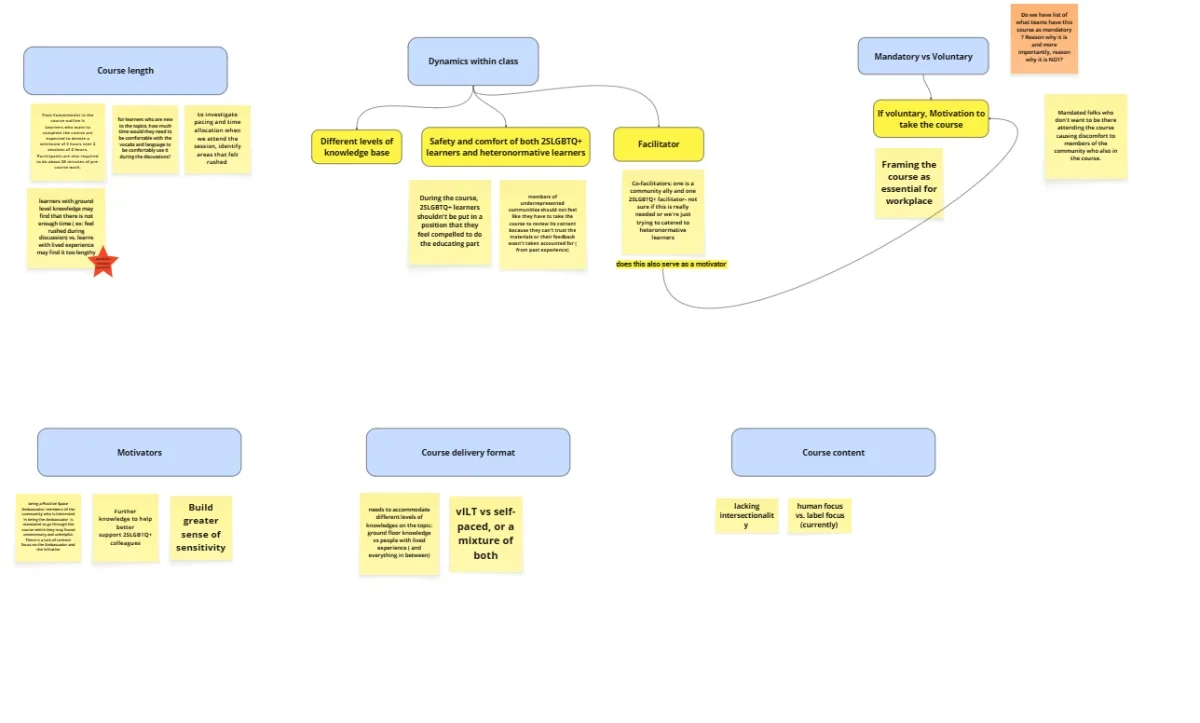
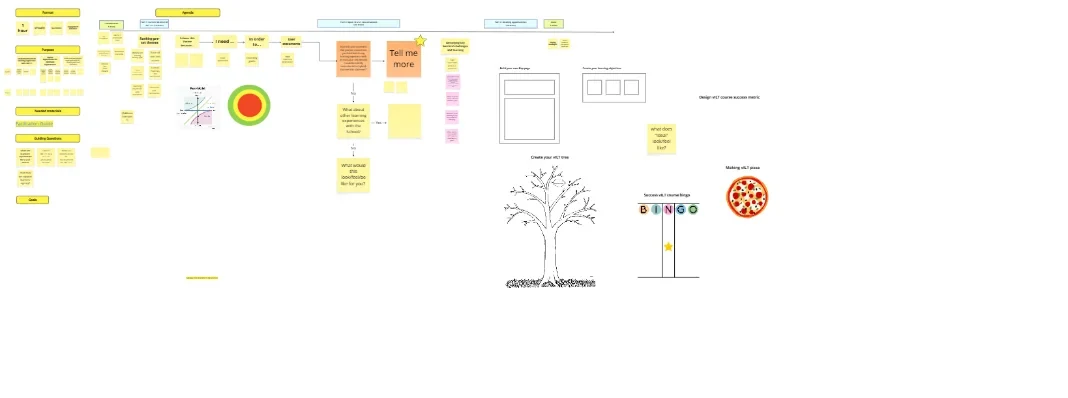
Noticing UX qualitative data gap in existing research approach, the UX team ran 5 participatory workshops to further understand individual learning experience and co-create improvements with learners.
I designed a co-design workshop with each activity intentionally created to help participants articulate needs, rank priorities, and generate ideas.
- Developed the workshop methodology
- Created facilitation materials & collaborative exercises
- Facilitated virtual learner workshops
- Guided discussions while ensuring psychological safety
- Translated findings into strategic recommendations
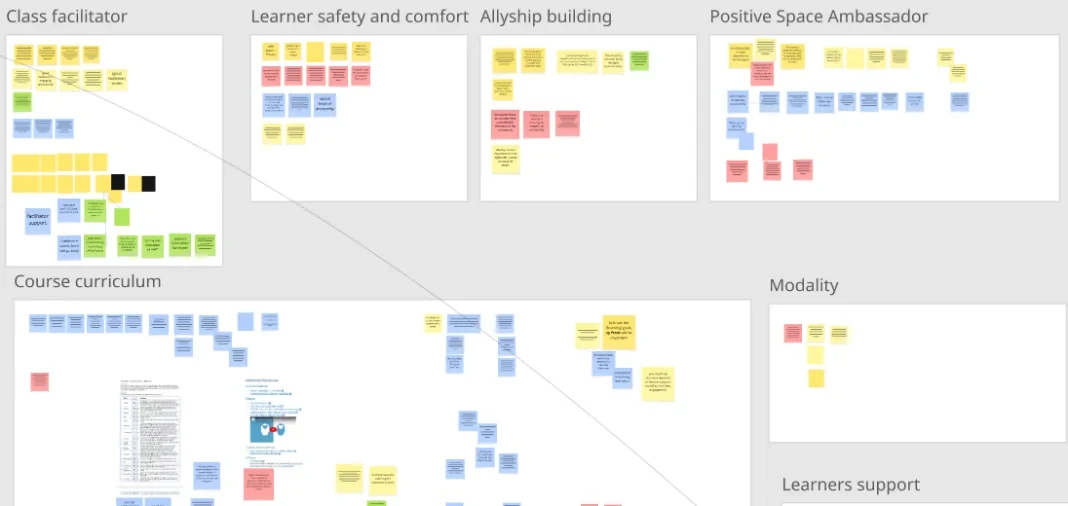
From all research, four themes consistently emerged:
One course served multiple learner needs
Learners arrived with vastly different knowledge and motivations. The course is mandatory for some but optional for others. New learners needed time to build foundation knowledge while those with lived experience found sections repetitive. There was opportunity for more catered learning.
Expectations were unclear before the classroom
Many didn't know the course spanned two sessions, leading to difficulty when asking for time from work to attend learning. Learners wanted clarity on what to expect before attending.
Psychological safety for learners
As the course emphasized on allyship, it could feel alienating to community members. Members of the community "felt put on the spot" when examples were mentioned. In addition, learners may want to have their camera off. The learning experience should prioritize comfort and safety of all learners.
Opportunities for continuing learning
Learners expressed needs for further learning beyond the single course. Groups, channels and other community forum formats were brought up for ever-green learning. CSPS could use this opportunity to shift from learning provider to leader.
Rather than prescribing one solution, the UX team synthesized learner needs, operational constraints, and instructional goals into six proposals.
This gave stakeholders a flexible roadmap to evaluate approaches by implementation effort, learner impact, and organizational priorities.
Six proposals
Strengthen the existing two-session course
Improve learning objectives, expectation setting, and instructional alignment within the current format.
Create a tiered learning pathway
A self-paced introductory course (INC110), an intermediate facilitated allyship course (INC111), and an advanced ambassador-focused course (INC112).
Redesign into a single intensive session
A focused 2.5-hour session supported by pre-learning materials.
Introduce a blended learning model
Combine asynchronous learning with a shorter facilitated virtual session.
Develop role-based learning pathways
Tailored paths for different audiences: beginners, leaders, and experienced learners.
Partner with external organizations
Supplement advanced learning through partnerships while redesigning the introductory course to focus on core competencies.
Presented to leadership and product owners, these options laid the groundwork for UX role in product improvement. While implementation was outside my scope, the recommendations were accepted by the product owner as the foundation for future redesign and roadmap planning. The project becomes a prime example of a multidisciplinary team in course evaluation.
Learning experiences extend far beyond classroom content. Though the original objective was to evaluate a single course, the research showed learner success depended on the surrounding service ecosystem, from registration, expectation setting, facilitation, to continued community support after course finishes.
As the UX lead, I had the opportunity to use diverse research methods to transform learner's needs to business improvements.